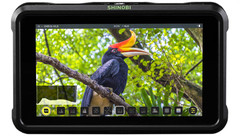


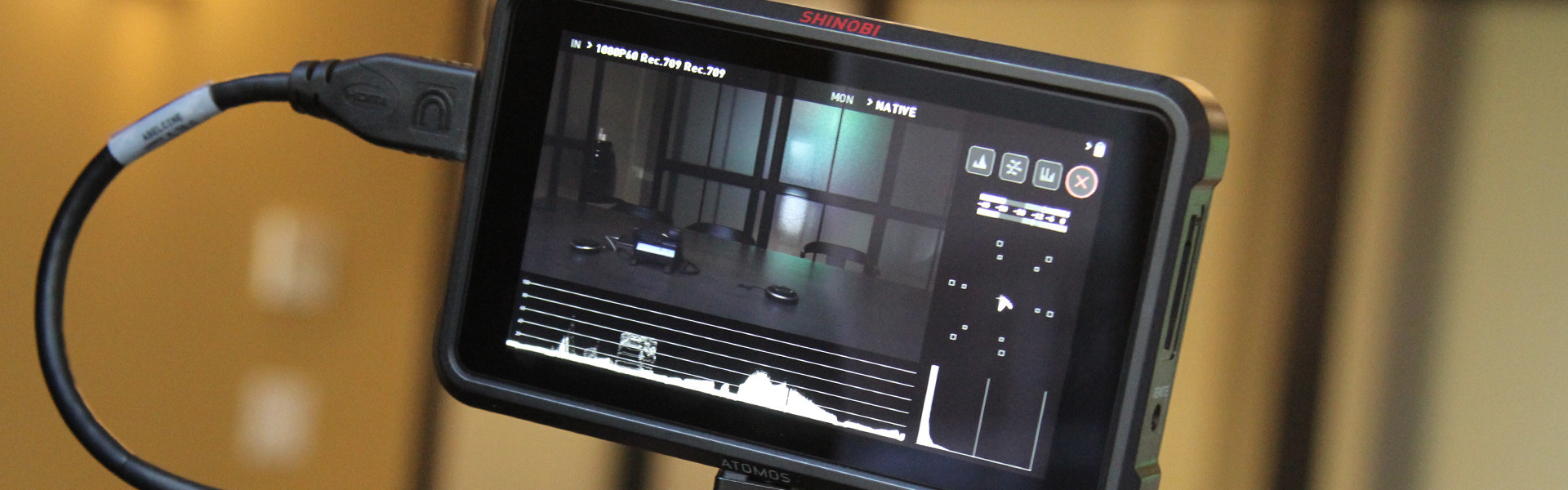
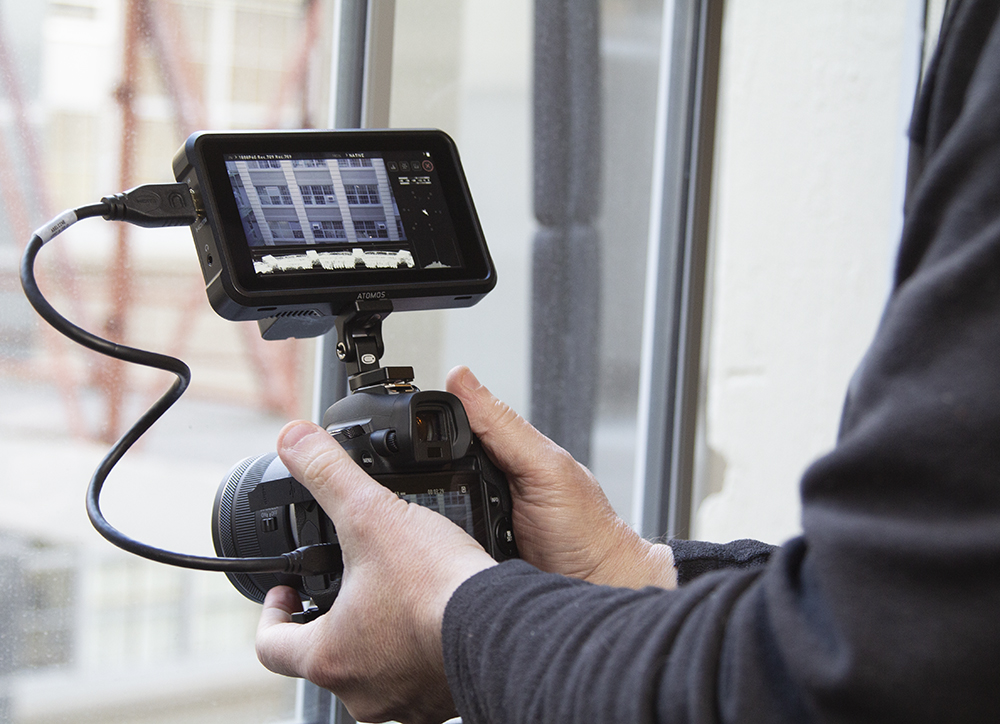
With a full HD screen (1920x1080) at 427ppi, the Shinobi provides a crisp, clear and bright image that should qualify as “daylight viewable” for all but the brightest environments. It also features 3D LUT support: both a suite of built-in LUTs for popular camera Log curves and color spaces, as well as the ability to load 3D LUTs via SD card in .cube format. The capacitive touchscreen provides direct access to LUTs, scopes and other tools via the new, streamlined AtomOS user interface and gives the Shinobi a clean design. In fact, there’s only a single button on the entire monitor (for power on/off).
Due to the high panel brightness, the Shinobi supports AtomHDR, Atomos’ high dynamic range viewing mode, and can show over 10 stops of latitude in 10-bit color. It also supports HLG and PQ input signals. UHD and Cine 4K input signals up to 29.97p are supported as well, and full-HD signals up to 59.94p.
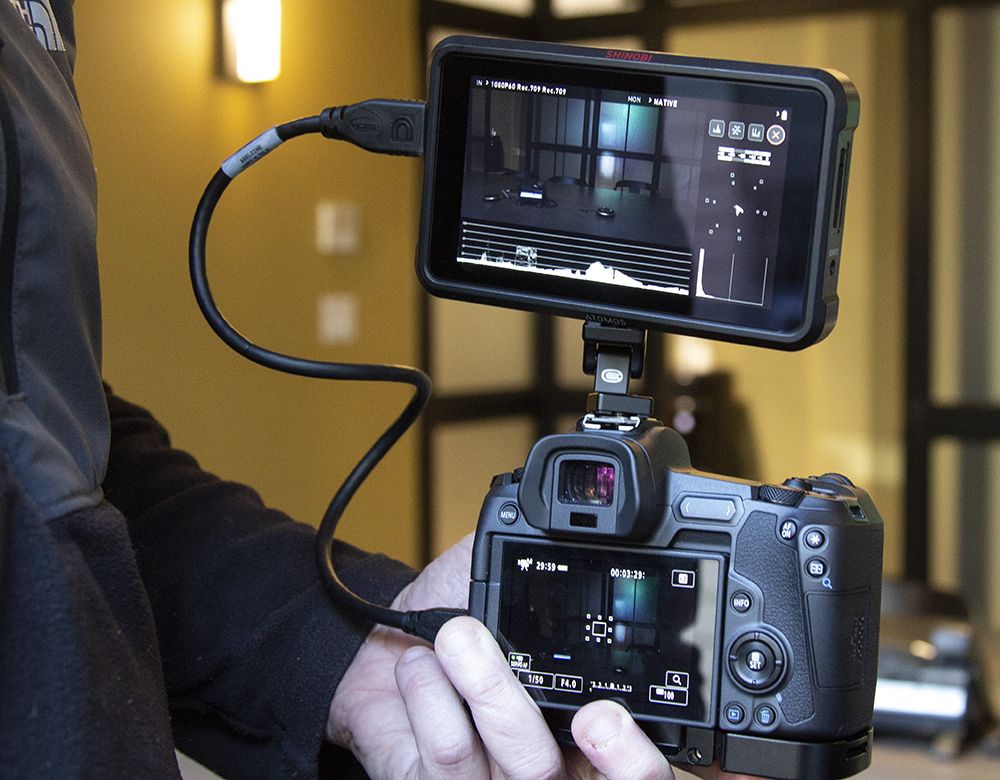
A rich set of tools for signal analysis are present as well: focus peaking, variable zoom (4:1, 2:1 and 1:1), zebra, false color, frame guides, waveform monitor and vectorscope and anamorphic de-squeeze (1.33x, 1.5x, or 2x). My favorite feature, by far, is what Atomos is calling Analysis View. Analysis View divides the screen into sections with the image occupying the upper left-hand area. The rest of the screen is then dedicated to a waveform (along the bottom, configurable as luma-only or an RGB parade), histogram and vectorscope on the right-hand side, and even audio level monitoring. This view, which can be combined with the excellent false color mode, provides virtually everything a DP or DIT could want in a multi-scope view.
Shinobi features a single center-rear NP-F compatible battery terminal, which is also capable of accepting a “dummy” battery supplying 6.2-16.8V.