



Tutorials & Guides
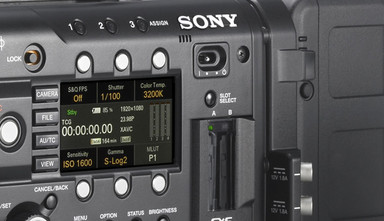
With the latest 3.0 firmware update, Sony has given users the ability to shoot a variety of high frame rates, but many people are still a bit confused about how to get to their desired frame rate. I've created a flow chart to help de-mystify the process, but first, let's go over the menu options needed.
Tutorials & Guides
We've discussed many of the advantages of shooting Log C on the ALEXA before, but often one of the biggest roadblocks is the preconceived notion of an overly complex workflow. While this can be true if you need to grade the majority of your footage, often times (especially if you nail your exposure), a simple translation is all that is necessary.

Tutorials & Guides
Over the last couple of days, we've had some time to play with Sony's recently-released F5/F55 firmware version 3.0. The new firmware has tons of updates, which are outlined in Jeff's previous blog, but I wanted to specifically highlight a couple of the new features including Super16 Center Scan mode, new LUT options, and High Frame Rate mode.

Tutorials & Guides
In one of my previous posts, I discussed using the Canon C100 with the Atomos Ninja 2 recorder, but what I didn't touch on was how to rig up this combo for real-world shooting. Kitting cameras is always challenging because every camera operator shoots a bit differently. When building a camera rig, it is essential to get the ergonomics right to ensure operator comfort and ease-of-use.

Tutorials & Guides
AbelCine is an official reseller of the Freefly MōVI Camera System, and we offer the only Freefly certified workshop on the MōVI system.
Tutorials & Guides
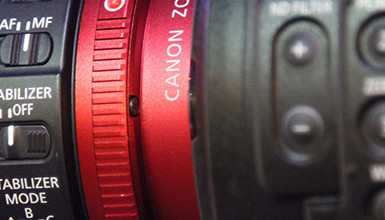
Today's quick tip involves changing the white balance on the Canon C300 and C500. There are actually five white balance modes to choose from, selectable via the Function button at the back of the camera. The Function button also allows you to change your ISO and shutter speed, so today i'm going to show you how to dedicate one of the assignable buttons to white balance, which is great for very fast adjustments.
Tutorials & Guides
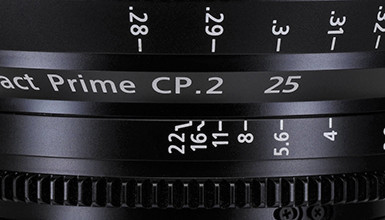
One of the great features of the Zeiss CP.2 Prime lenses is the ability to change lens mounts.
Tutorials & Guides
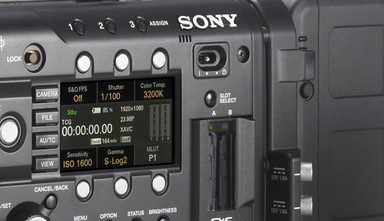
Sony has added a ton of new features to the F5 and F55 with the release of their version 2.0 firmware (which you can download directly from Sony's Community site).
Tutorials & Guides
Zeiss has just starting shipping their new CZ.2 28-80 Compact Zoom lens. This lens joins their family of Compact Zooms, which also contains the 70-200 CZ.2 and their newly announced 15-30 CZ.2. The Compact Zoom lens family is similar to the Compact Primes in that these zooms cover the large full frame sensors that are found on cameras like the Canon 5D Mark III, 1D C, and also the large sensor area of the Red Epic Dragon at 6K. They also have interchangeable lens mount systems (PL, EF, F, MFT, E). These features make the lenses unique in the zoom world, as well as future-proof.